Politics
Data Center Policy Debate in Illinois Spans Environmental, Economic Goals
Data centers are a hot topic in Illinois and around the country.
Alongside more construction comes more public scrutiny — of their economic and environmental impacts, their strain on the electrical grid, and their role in the development of artificial intelligence models.
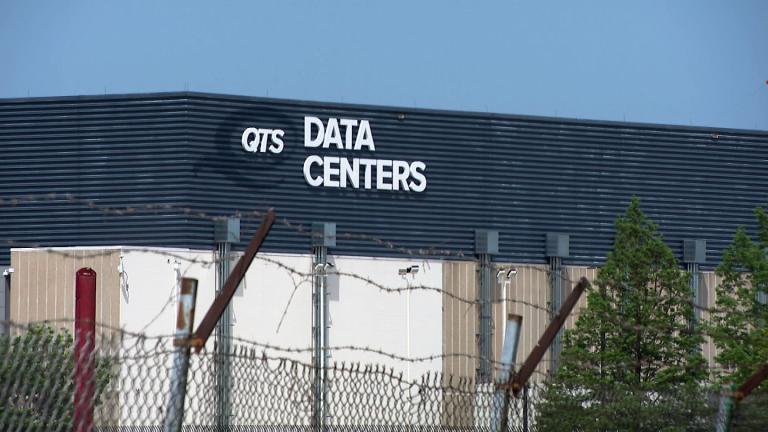
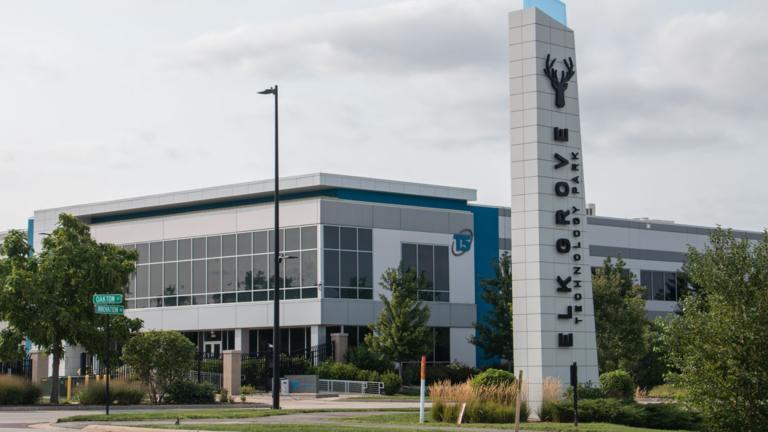
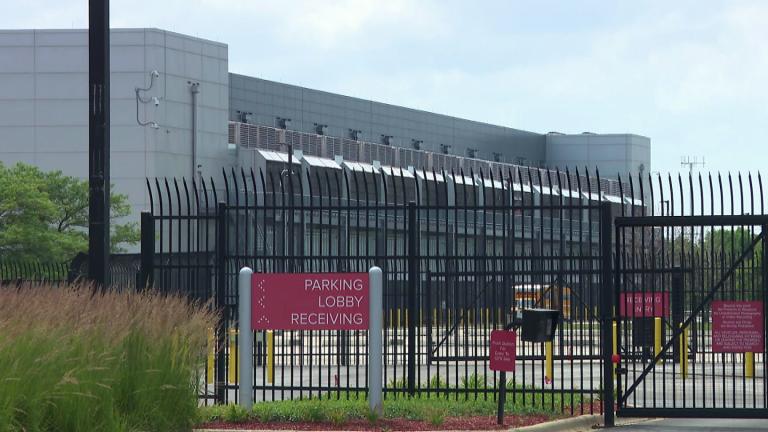
Data centers pack rows upon rows of computer chips and other hardware into climate-controlled warehouses. These facilities support cloud data storage, computing, smartphone use and more. But with AI occupying a growing slice of this infrastructure, the build-out of data centers has exploded around the country.
“The data center industry has been around for decades,” said Brad Tietz, state policy director of the Data Center Coalition. “We’re going to use twice the amount of data in the next five years that we used in the past 10 years… and it’s not just entertainment. It’s hospital records, bank records, government, schools, public safety, remote work, telehealth, the list goes on.”
In 2018, data centers accounted for 1.9% of all electricity consumption in the U.S. according to a 2024 report from Lawrence Berkeley National Labs. By 2023, that jumped to 4.4% of all electricity in the country. And the trend is not slowing down, with estimates for 2028 ranging from 6.7-12%.
Environmental advocates see an opportunity to meet this energy demand with new clean energy sources, like wind and solar power.
“If we are using the power sector in a way that we’re bringing more carbon sources online, or keeping them online longer, it’s going to be problematic,” said Jen Walling, CEO of the Illinois Environmental Council.
This spring, state lawmakers introduced the Protecting Our Water, Energy and Ratepayers (POWER) Act to regulate the construction of large data centers. Within the bill is a requirement for new data centers to supply their own capacity to generate clean energy — the so-called “bring your own new clean energy,” or BYONCE provision.
Additionally, the bill would establish new requirements for monitoring water usage, complying with energy codes and negotiating agreements between communities and data center developers. Notably, it stops short of proposing a moratorium on data center construction.
“It’s not a moratorium, it’s not a ban — it’s guardrails on data centers,” said Walling.
But Tietz predicts that the stringent regulations might practically stop data center construction.
“Quite frankly, they would have saved themselves a lot of time had they just drafted a moratorium bill,” said Tietz.
Opponents of the bill also argued that it singles out the data center industry, while letting other industries that use large energy and water usage.
“We have on the table a proposal that is fairly broad, and does encompass a lot more than any one specific regulatory framework…” said Ramiro Hernandez, the vice president of public policy for the Illinois Chamber of Commerce. “I think it’s a challenge from our perspective, on a philosophical level, to allow for such an immense burden on the industry.”
But for Andrea Densham, the director of regional government affairs at the Alliance for the Great Lakes, guard rails on an emerging industry like data centers are important to stave off possible consequences.
“We had to spend billions of dollars to clean up the last centuries’ pollution… We want to ensure that we’re not polluting further,” Densham said. “And so we do that by having smart guard rails. We do that by ensuring there’s monitoring of water use, and water outputs.”
While the bill did not pass in the spring legislative session, Gov. JB Pritzker has publicly pushed for data center regulations to be a topic of conversation heading into the fall.
Meanwhile, the governor did suspend tax incentives for data center construction.
Hernandez worries that suspending these incentives could hurt state growth in the state’s tech sector.
“(The Department of Commerce and Economic Opportunities) annually reviewed the incentive. And just based off of the projects that received the incentives over the last few years, there’s been almost $16 billion of investment,” Hernandez said.
For supporters of the POWER Act, a pause in state tax incentives is not the ultimate goal. But pumping the breaks on data center development could help with that, they say.
“We are thrilled that the Governor paused the data center tax incentives… but I don’t think that this is going to be a long-term solution. Hopefully it pushes everybody to the table,” Walling said.